VBR Field Engineering Team
6 min read
When facility developers inspect a finished sports venue, attention almost exclusively lands on the top surface — the green hue of synthetic turf or the smooth sheen of an acrylic court. Yet over 80% of field longevity and playability depends entirely on what lies beneath.
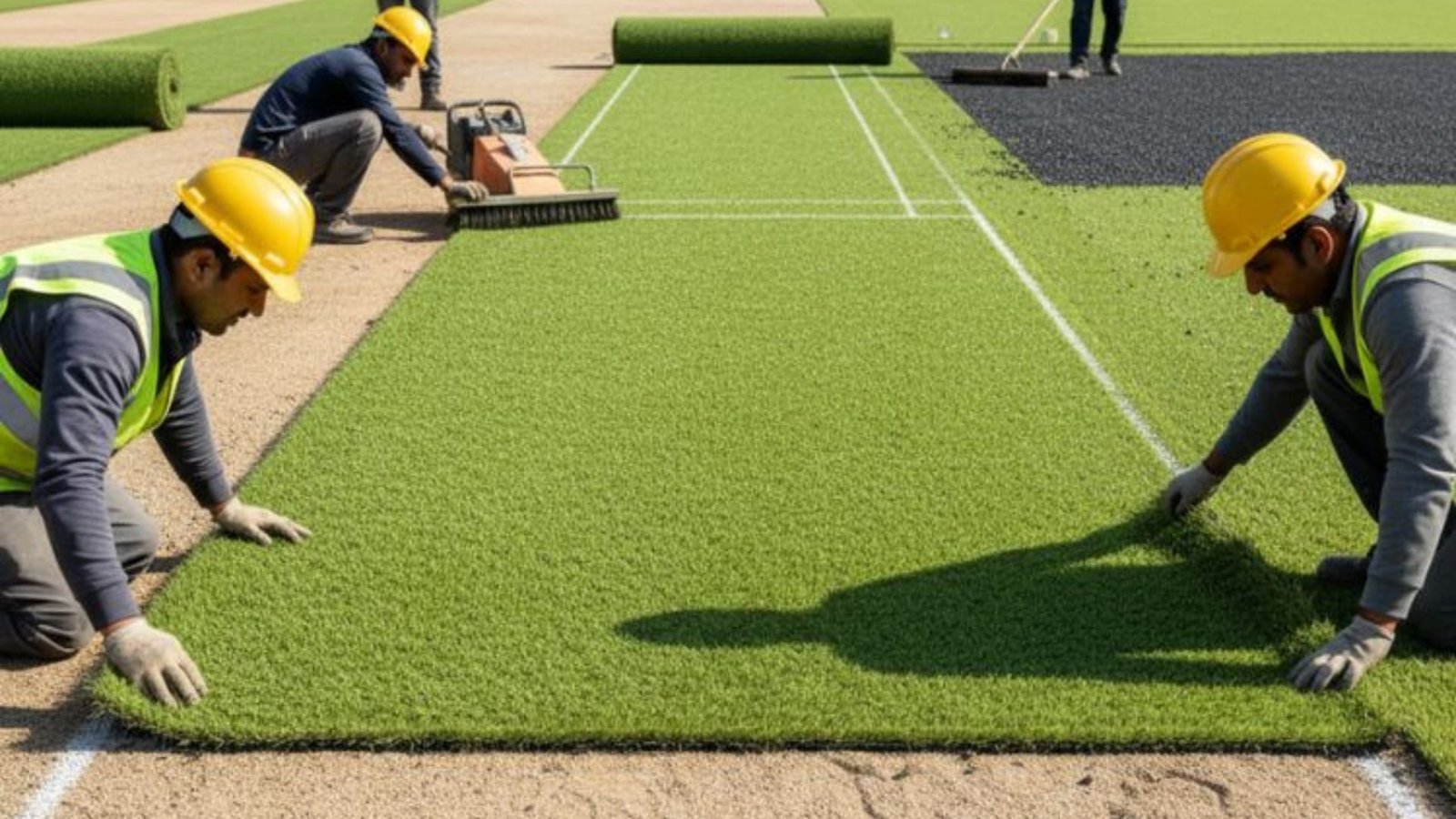
Before laying aggregate layers, soil stability must be quantitatively confirmed using California Bearing Ratio (CBR) testing. Improper sub-base compaction creates micro-settlement zones over time, causing uneven bounce, water pooling, and structural seam stress.
High-performance athletic fields utilize 3D laser-guided grading to achieve uniform micro-slopes (typically 0.5% to 0.8%). This subtle slope guarantees surface run-off towards perimeter drainage trenches without altering ball trajectory or player movement.
"True sports field engineering is invisible during play — yet felt in every stride, pivot, and rebound."
— VBR Engineering StandardIntegrating shock absorption pads (e.g., expanded polypropylene or rubber granules) decouples surface shock from the hard stone base. This reduces G-max values and protects player joints while retaining mechanical memory after thousands of impacts.